Friday, March 28, 2014

French localization services: iWL, ready for the future

This week, a study done by Frenchinvestment bank Natixis projected that there will be 750 million French speakers by the year 2050, making French effectively the most spoken language in less than 40 years. While the study has a couple of flaws, like not taking into account the language diversity in many countries where French is the official language and just counting their entire population as French speakers nonetheless, the fact that “it is the language of areas with population booms, particularly sub-Saharan Africa,” as the study points out, is undeniable.

It is also undeniable that French is widely spoken right now, and by widely I mean not only the number of French speakers, but also the variety and nuances one can find in the French spoken in different parts of the world. Let me illustrate this with this video about the differences between French in Canada and in France:


Right now, French is the ninth most spoken language in the world, and considering its spread around the world, its rapid growth, and the diverse uses of the language in the different French-speaking countries, offering high-quality translation services that can accommodate all of these nations’ particularities while keeping up with the rising demand is a tall order.

Fortunately, inWhatLanguage is up to the task. And the keyword for this is localization.

Localization is the full and complete customization of content for a specific language, dialect, idioms, and cultural context of the intended audience. Even if both cultures speak the same language, that doesn't guarantee that they use the same context to interpret linguistic content. By localizing content, you make sure that the true intended message shines through, without any of the embarrassing miscommunications that can happen when a literal French translation isn't quite enough.

In iWL, we take extra care to make sure that the work we do for our clients is properly localized to the cultural context of the intended audience. That way, you can rest assured knowing that your audience will fully grasp the intended meaning of the localized content we translate into French for you.

And also, this way we are also prepared for the future. A future where, regardless of whether French, Chinese, Malay or Urdu is the most spoken language, inWhatLanguage will be able to provide help for whoever needs their words to reach communities where other languages are spoken. Just try us!

Friday, March 21, 2014

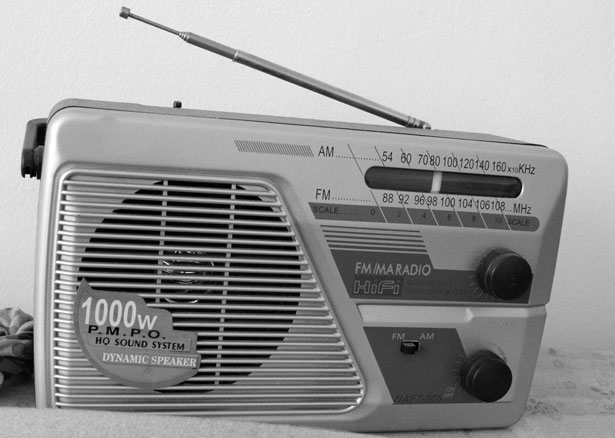
inWhatLanguage on the radio!

“Video killed the radio star”, goes the song. Well, not for us. Because inWhatLanguage has already released some cool videos in the past, and now it’s time to step into the world of radio waves!

Next Wednesday, March 26th, inWhatLanguage is going to be on the radio! You can listen to a cool featured piece with an interview featuring our dear CEO, Cody Broderick, talking about the company, our services, our goals and our plans for the future. Don’t miss it – it will be fun!

If you are a Utah resident, you can listen to it live between 7-8 a.m. and 5-6 p.m. on the following radio stations, depending on your location at the time of the broadcast:

Cedar City                          KSUB 590 AM
Logan                                  KVNU 610 AM
Moab                                  KCYN 97.1 FM
Monticello                           KBDX 92.7 FM
Richfield                              KVSC 980 AM
       KWUT 97.7 FM
Price                                   KUSA 100 FM
St. George                           KDXU 890 AM
Vernal                                 KVEL 920 AM
      KLCY 105.5 FM

 If you are in Wasatch Front, the broadcast will be at 7:23 a.m., 11:47 a.m. and 5:23 p.m. on KSL 102.7 and FM, 1160 AM, and in Manti, between 8-9 a.m. and 5-6 p.m. on KMTI 650 AM.

Of course, as an international company with a global reach and hundreds of translators all over the world, we understand that there might be some people beyond the state of Utah who would want to listen to the broadcast, too. Well, no need to worry! You will also get the chance to listen to it online on the zionsbank official website, as well as on ksl.com.

Thank you so much for trusting us with your translation needs, and let us keep growing everyday together – but always keeping our main trademark: low-cost, high quality translations, with fast turnaround times and a commitment to relationship and customer service.


Because that is what makes inWhatLanguage a trust-worthy translation agency that is slowly but steadily turning into a favorite partner for more and more prestigious global companies every day.

Friday, March 14, 2014

IWL and the web: a winner combination for many years to come

It seems unbelievable, but the web, that little tool that nowadays we use practically for everything –from looking up word meanings to booking flights, from keeping up with friends to buying extremely rare items- is only 25 years old. As you can read in this articlefrom The Independent, a young computer engineer named Tim Berners-Lee working in a physics lab in Switzerland submitted a paper titled “Information Management: A Proposal” twenty five years ago. In this paper, he introduced to the world for the first time the HTML language and the HTTP Protocol, both of which are the base for anything that we check in our internet browsers.

This week marked the web’s 25th anniversary, and on this occasion, inWhatLanguage took a look back at its own history as well.

iWL is, after all, a young, internet-based company: our incredible versatility and worldwide reach comes from the fact that we use the web to offer our translation services, contact our clients and deliver high quality, affordable translations. This allows us to save on time and logistics costs and adapt to the current trends as fast as the times demand it, thus making us a reliable source for good translations wherever you are, whenever you need them.

Our website has evolved greatly as well, offering not only more services, like interpretation, web translation, transcription or multimedia services, but also a much easier interface and a very attractive design. We have also entered the massive world of Social Media such as Facebook, Twitter and Google+, a great way to reach millions of people who might be interested in our services. Our communities keep growing every day with lots of awesome new users interested in translation, languages and current related news.

And we don’t plan on stopping there: from now on, we will continue to work harder to be more interactive and to provide our clients with more options to make collaborations even more enjoyable.

After all, our objective hasn't changed in all of these years: “Building a long-term, growing, sustainable company where people love the culture and we remain a top choice for global organizations based on our value proposition:  low-cost, high quality translations, with fast turnaround times and a commitment to relationship and customer service,” in the words of inWhatLanguage CEO, Cody Broderick.


The web, our dear 25-year-old web, has suit our purposes beautifully up till now. And we are sure that our beautiful journey together will continue for many more years to come. Congratulations!

Saturday, March 8, 2014

Women and their mark in translation

Happy International Women’s Day! On this day, March 8th, the team at inWhatLanguage wants one more time to express our most sincere thanks to all of our awesome female employees and translators, as well as all those women who support us with their trust and patronage. While we naturally appreciate the work of all of our team members, male and female alike, today we take advantage of the occasion to tip the scale of our affection towards the women’s side… Because they are worth it.

The history of language and, by default, translation, has been traditionally led by men. More often than not, women unfortunately didn’t have the chance to make a difference. Seeing the important role they play nowadays in the field of translation, as we in inWhatLanguage have the pleasure to experience every day, one has to wonder how would things have turned out in this day and age, if women were given a bigger role in the history of language and translation.

La Malinche, as part of the Monumento
al Mestizaje in Mexico City
However, the fact that women were not as prominent as men in the history of translation doesn’t mean that they were inactive in its development. Take La Malinche, or Doña Marina as she is also known (1496 or c. 1501 – c. 1529), for instance. She is undoubtedly one of the earliest examples of an interpreter, be it woman or man. Doña Marina was a Nahua woman from the Mexican Gulf Coast, who acted as an interpreter, advisor, lover, and intermediary for Hernán Cortés. She was one of twenty women slaves given to the Spaniards by the natives of Tabasco in 1519. With her language skills, she was able to discover a plot by the natives to attack the Spanish army. She alerted Cortés, and thus the Spanish army avoided the ambush. She also had a very important role in the Conquest of Mexico.

Elizabeth F Ellet
(1818–1877)
There are many other women who have made their mark on the history of language and translation. Take American writer Elizabeth F Ellet (1818–1877), who started translating Italian poet Silvio Pellico’s Works when she was 16, and ended being the first writer to record the lives of women who contributed to the American Revolutionary War. Or German-American writer Mildred Fish-Harnack (1902 –1943), who after moving to Germany from America in 1929, wrote and translated books and document from English to German and vice versa despite the restrictions imposed by the Nazi regime until her arrest and untimely death.

Mildred Fish-Harnack
(1902 –1943)
There have been many women whose lives have made a difference on the history of translation. Check out this website where you can actually browse a list of famous female translators throughout history. And the greatest thing is that the list will continue to grow, and we, at inWhatLanguage, are in a privileged position that allows us to see so many amazing women doing their best to elevate translation and interpretation to an art.

Congratulations to all of you, our dear female translators. You truly deserve it.

Friday, February 28, 2014

Website Translation: a job for experts

The art of translation is as ancient as languages themselves, and what we normally understand by “translation” nowadays is the most traditional form of translation services: document translation. Not without good reason, of course: over the course of centuries, all sorts of literature have been translated into hundreds of languages by hand at first, then with the help of a typewriter, and finally computers.

With the arrival of internet, the quantity of documents that need translation has multiplied exponentially, and some, if not most of them, are not even in the traditional document format we all know anymore. A very specific type of translation has also risen in importance: website translation. And with it, the demand for professionals that can satisfy this need in a fast, reliable way.

However, this is not as easy as it sounds. Website translation is very different from traditional document translation. A website has a system of its own, and a language of its own, as well. And for a website translation to be done properly, the linguist must be aware of all this, on top of being fluent or native in the languages s/he is working with. A website translation is not composed of sentences like we all know, subject-verb-predicate. A website translation consists of commands, of small explanatory texts that must give very clear instructions with a strict character limit, of menus, of header bars, etc.

The language in a website must be, among other things:
  • ·         Concise
  • ·         Self-explanatory
  • ·         Functional
  • ·         Mostly devoid of embellishments

But with all this, the result must be:
  • ·         Clear
  • ·         Intuitive
  • ·         Easy to read
  • ·         Coherent

Coherent not only with regard to the rest of its own content, but also with the rest of websites in the same language: we don’t want to make our website as unique as to confuse the user, now, do we?

A website is also a multimedia document. That is, it can contain pictures, audio files, videos, animations, slideshows, and many other things. The language for all these elements must also have its distinctive features, and they must remain there after the website has been translated.

For all of these reasons, when a person or a company wants to have its website translated, they must be careful about who to entrust this delicate job to. Experience in this field and a guarantee of satisfactory results are a must, especially considering that nowadays a business’ success pretty much depends on its Internet presence. The internet offers commerce on a global scale with millions of people accessing the web in multiple languages other than English.

Friday, February 21, 2014

Happy International Mother Language Day!

Today, February 21st, is the International Mother Language Day, and of course, the inWhatLanguage team didn’t want to miss the opportunity to send our most sincere thanks and congratulations to all of the people in this world that contribute to the immense language diversity that makes our planet so colorful!

Nelson Mandela once said: “If you talk to a man in a language he understands, that goes to his head. If you talk to him in his own language, that goes to his heart”. In times like the ones we are living in, when international travel is an everyday thing and people migrate for thousands of reasons many times during their lifetime, it is wonderful that they don’t have to lose contact with their mother language. Of course, they will learn new languages along the way, and achieve new levels of cultural understanding and linguistic enrichment. But the mother language is part of a person’s identity, and it will always be their gateway to freely express their thoughts and needs.

And that is also why, if you ever need help finding your own voice in a place where no one speaks your mother language, inWhatLanguage will always be there for you. With a range of more than 160 languages, we will offer our services and help you to the best of our abilities. Just go to our official website, choose your desired language translation combinations or play around to see how many languages and combination of language translation services our inWhatLanguage expert linguists are capable of translating your projects to and from. Not only are our linguists talented, but they are usually experts in the culture that they represent when translating. This gives inWhatLanguage client's the edge in having the best language translation services available!

Chinese translation, English translation, Spanish translation, Arabic translation, Hindi translation… We offer a huge variety of services in all of the world's most widely spoken languages, according to this recent article published in Silicon India News. But you can also count on us to deliver the best translation services for far less extended languages and dialects, like Maori, Sindhi, Xhosa, Welsh or Dari. A lot of translation agencies can offer the most widely spoken languages in their translation services, but only the best can guarantee you the highest quality in the less demanded dialects. And the best quality is the least you can expect from us!

Have a happy International Mother Language Day, and enjoy speaking and writing in your mother tongue. This way we preserve our language, our identity, our cultural diversity… And a world full of different languages to explore!

Friday, February 14, 2014

The universal language of love

Happy Valentine’s Day!!

Today, on this beautiful 14th of February, the world once again celebrates Saint Valentine’s Day, the day on which couples form and love is confessed, when lovers remind each other of their feelings by means of gifts… Or words. Words that can be spoken in so many languages, but yet convey one same meaning. The language of love is universal.

Saint Valentine’s Day has arguably turned into a commercial phenomenon ever since Esther Howland, the woman who produced the first commercial American valentines in the 1840s, sold $5,000 in cards during her first year of business, according to the information published in this article, on the website howstuffworks.com. “The valentine industry in the United States has been booming ever since. Today, over 1 billion valentine cards are sent in this country each year -- second in number only to Christmas cards, according to the Greeting Card Association.”

However, the most important thing on this day is not how much you spend, but how well you express what you need to say. And as this day’s celebrations spread throughout the rest of the world, terms of endearment are being whispered in millions of ears, in hundreds of different languages, dialects and accents.
For inWhatLanguage, the main object of our love is language itself, and of course the people who work with it -our linguists-, and the clients that allow us to do what we love: translate and interpret, and help people communicate easily wherever they are, whenever they need to do it. Because no language barrier should ever stop a person from telling another that s/he loves him/her.

And because we would be delighted to help you do that.

However, for those who still need some inspiration to express their feelings, here are some quotes from famous authors to get you started: